
Insights · Residential development
Designing estate water around one borehole, for both water it might yield
A demand model and dual-path treatment design for a five-block coastal estate in Lagos, sized before any equipment was selected.
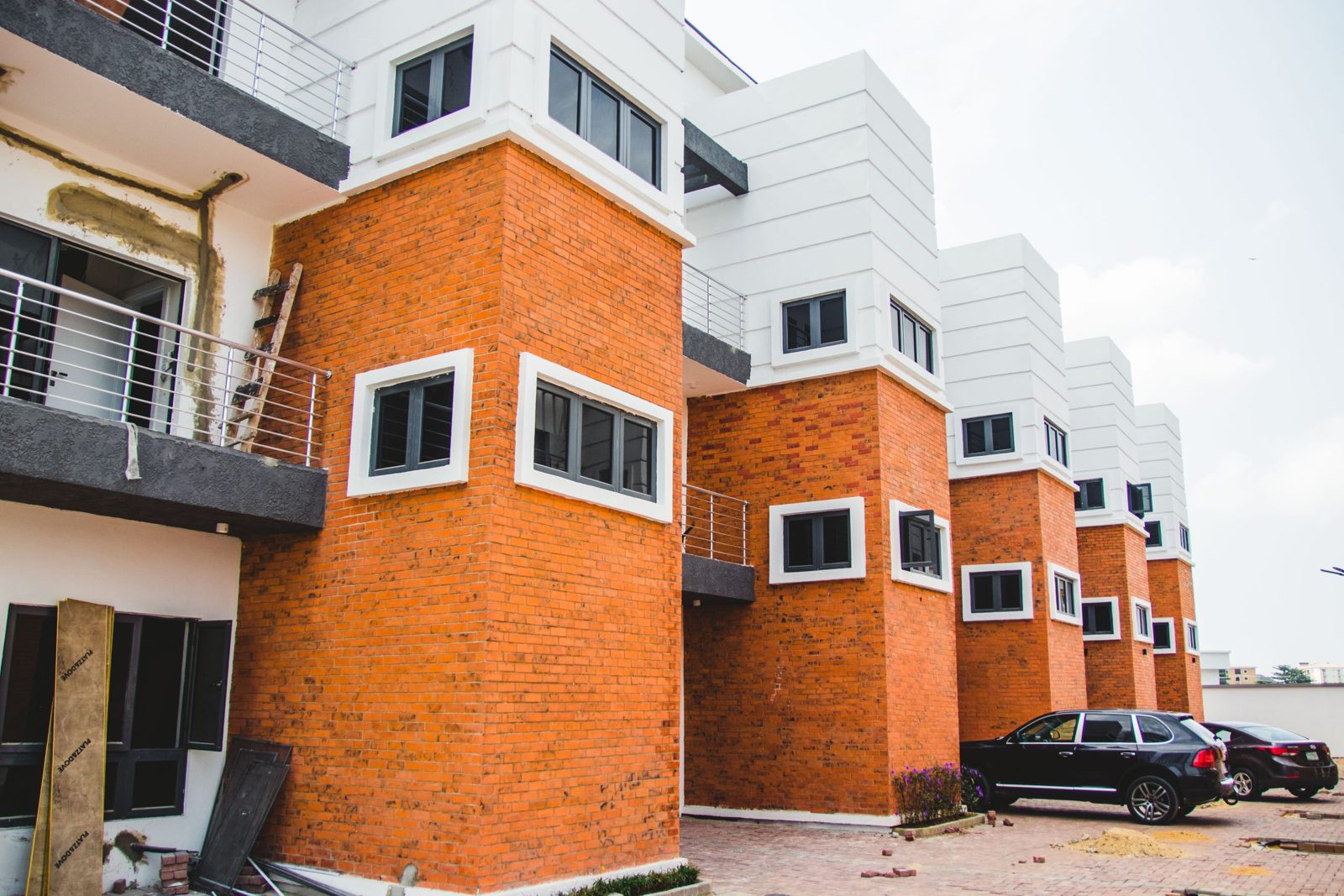
- Client
- Periwinkle Residences Limited
- Sector
- Residential development
- Region
- Lagos, Nigeria
- Timeline
- Delivered 2025
- Services
- Demand modelling, Treatment design, Commissioning roadmap
The challenge: one source, two possible water chemistries
A coastal estate of five blocks and roughly one hundred flats drawing on a single borehole has no margin for a wrong assumption about its source. Near the Lagos coastline the same borehole can deliver water that is straightforward to treat, or water that has turned brackish. Those two cases need different plant.
The usual response is to pick one, specify for it, and hope. If the assumption is wrong the estate discovers it after the equipment is bought, at which point the remedy is a second capital cycle rather than a settings change.
The approach: model the demand, then design for both cases
The work began with a demand model rather than a product selection: what the estate actually draws, when it draws it, and what the peak looks like across a hundred flats rather than an averaged figure that no plant ever experiences. Demand was sized at roughly 48 to 60 cubic metres a day, with a peak treatment flow of about 6 to 10 cubic metres an hour. Every equipment decision downstream refers back to those two numbers.
The treatment design was then written as two paths from the same source. Media filtration and UV where the raw water shows moderate chloride; reverse osmosis where it indicates coastal intrusion. Both engineered on BWT hardware at the same 8 to 10 cubic metres an hour duty, so the estate is not choosing between two different levels of service.
Disinfection is multi-barrier rather than single-point: a UV barrier plus a free-chlorine residual carried into storage and distribution, operated to WHO and Nigerian Industrial Standard targets of at least 0.5 mg/L after thirty minutes contact below pH 8.0, and at least 0.2 mg/L at the point of delivery. The UV sits after the tank rather than before it, because the risk being managed is contamination in storage, not just at the wellhead.
The monitoring architecture is common to both paths: UV intensity, flow and pressure differential across media and cartridges, conductivity and total dissolved solids on the outlet, tank-level interlocks and critical pump trips. The operator sees the same instruments whichever path is built.
Turnkey budgets were produced for each path, and a commissioning roadmap written before anything was ordered. Site meetings were held in Lagos rather than conducted from Vienna, because the questions that decide this design are answered by standing on the site.
The results: a decision the estate can make with evidence
The estate holds a written demand baseline, two costed treatment paths with the conditions that select between them, and a commissioning sequence. The source test decides which path is built; it does not decide whether the design work has to start again.
The selection is settled by evidence rather than judgement: a full potability panel covering chloride and total dissolved solids, iron and manganese, turbidity and UV transmittance, hardness and alkalinity, E. coli, and silica where reverse osmosis is in question, alongside a step-drawdown and constant-rate test to establish safe yield and confirm the borehole can carry backwash. Commercial figures from the briefing are the client’s and are not published here.
That is the whole point of ordering the work this way. The expensive failure in estate water is not choosing the wrong treatment train. It is choosing any treatment train before the source and the demand are known.
5 blocks
Roughly 100 flats served
Delivered
2 paths
Media and UV, or reverse osmosis, from one source
Delivered
WHO / NIS
Disinfection alignment
Delivered
This note covers Estate water demand and treatment design, recorded in the firm’s track record.